
MapAid: What happens when the world's aquifers dry out?
Notes from a hybrid business person & aid worker: Chapter 11
What happens when the world's aquifers dry out? One solution from East Africa.
Climate change and tree felling are affecting aquifer systems throughout the world, which are drying out...
Some obvious elements of the problem are that because aquifers are out of sight, and the drying is happening slowly, we cannot see or feel the imperceptible growth of this problem.
“Rapid groundwater decline and some cases of recovery in aquifers globally” (1) is the title of a paper by Jasechko et al, released earlier this year, analysing 170,000 wells across the world, reporting this drying trend.
MapAid has found the same. In our collaborative research, to build our WellMapr AI to detect shallow groundwater, we have discovered something strange in our relatively small catchment area of Bilate used to test our system, It is 5,276 square kilometres and located at latitude 6˚34ʹ to 8˚6ʹ N and longitude 37˚46ʹ to 38˚18ʹ.
Over 20 years this portion of the Rift Valley in Ethiopia, has been losing about 0.5kg of water per square metre per year. This may not sound much, but over geological time, it is huge.
Therefore, the world must ideally gain a renewed emphasis on “managed aquifer recharge techniques”, such as drilling boreholes that act as water pipes into aquifers, and not just wells for above-ground use.
Over much of January 2024, I have been working in Ethiopia, capturing feedback in qualitative interviews for possibilities to improve the development of our prototype WellMapr© system for shallow groundwater detection.
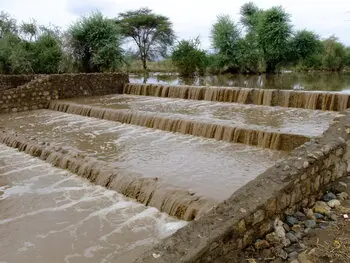
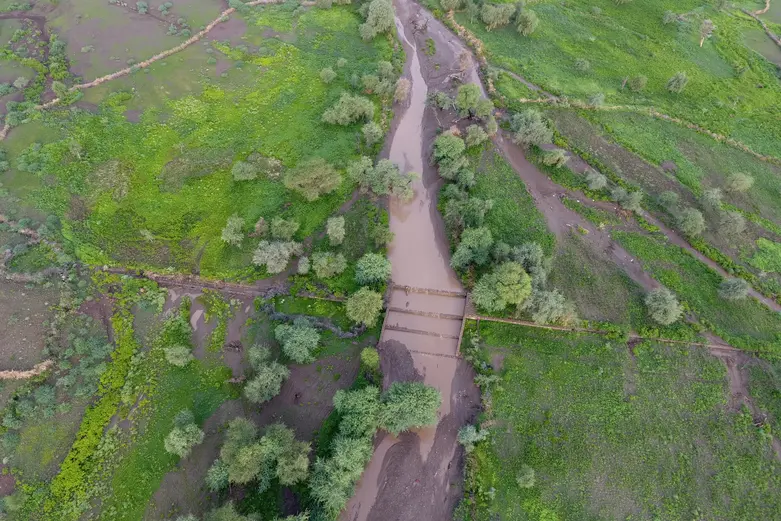
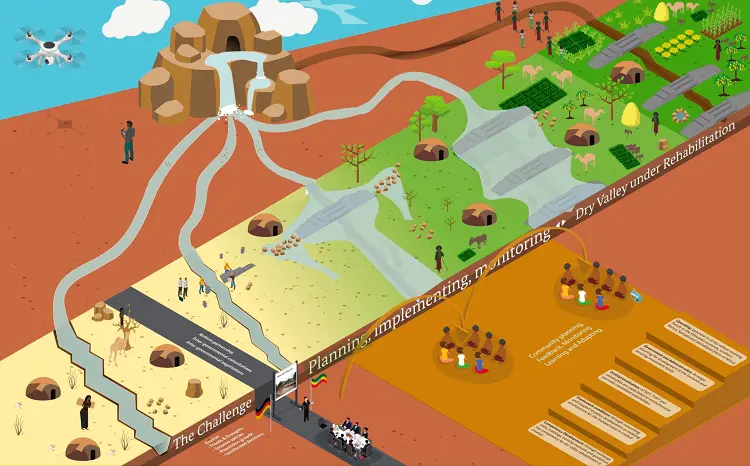
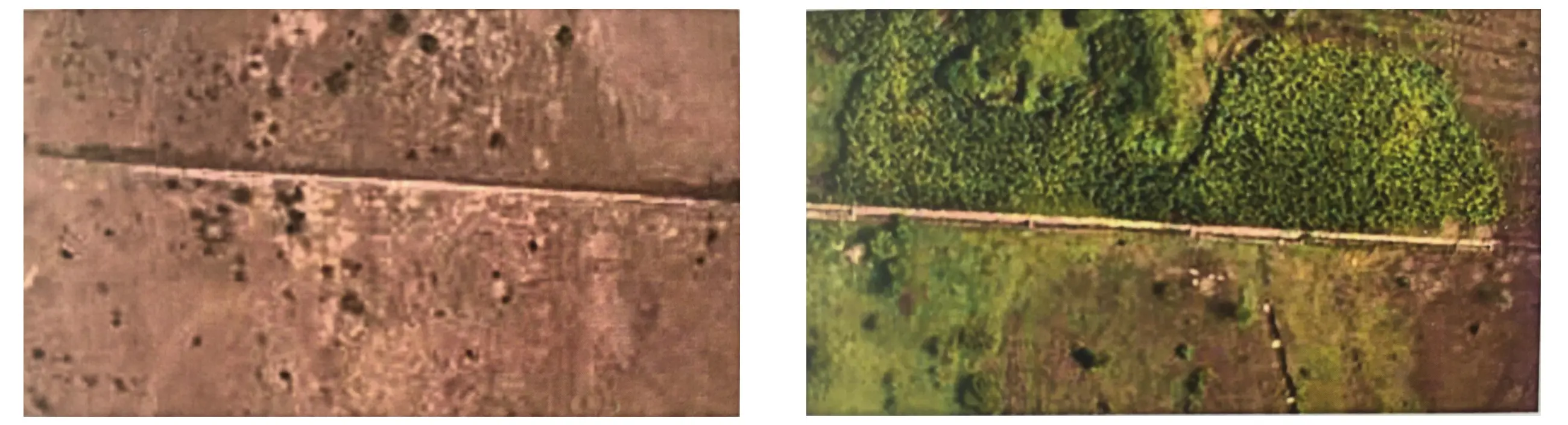
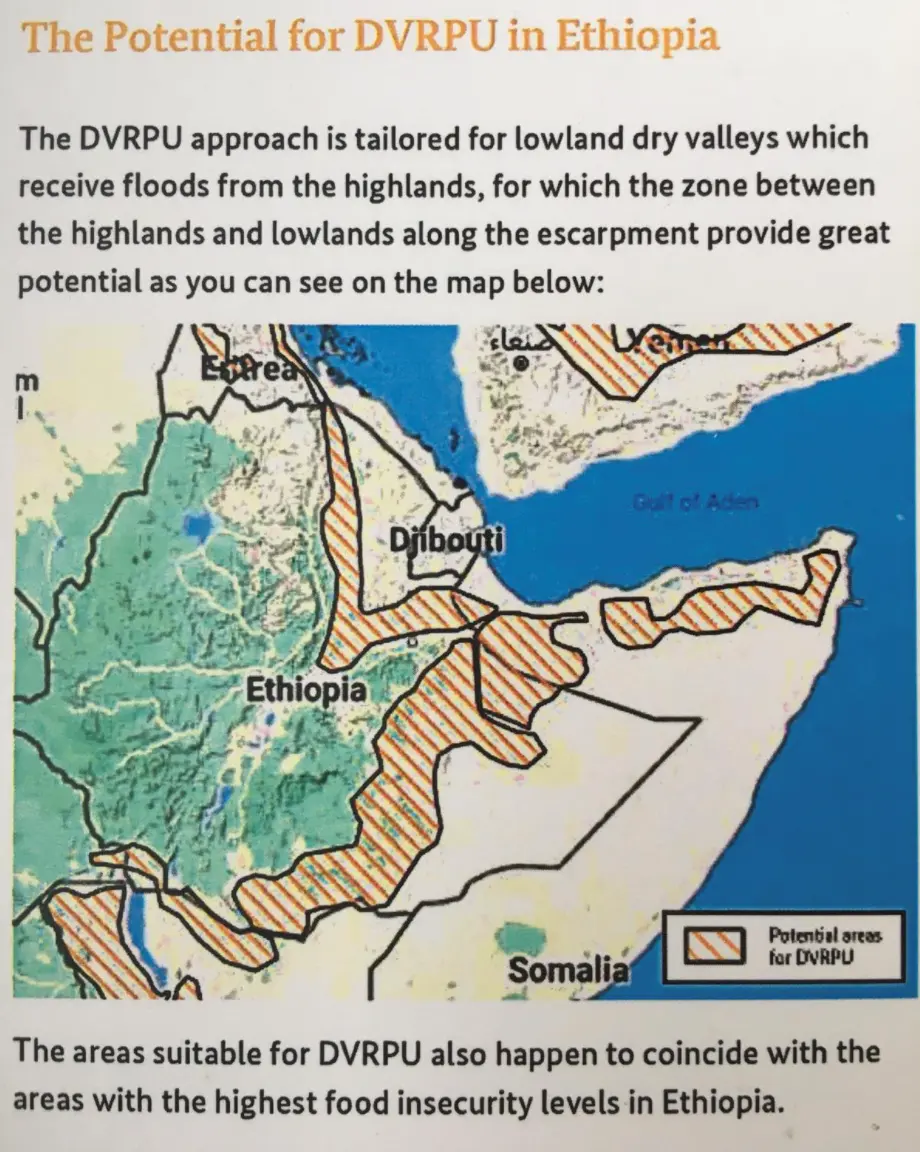
One of the most interesting projects I’ve seen that supports managed aquifer recharge is about conserving flash flood water that occurs in arid zones. The bilateral German agency GIZ, which has been working in the arid zones of Ethiopia, has been working closely with local desert communities to put simple but strong low walls, at 90 degrees to eroding gullies caused by soil erosion. These walls slow the rate of water flow and act as silt traps, effectively slowing the force of the flash floods, and allowing an opportunity for more water to enter the underlying aquifer. The system is simply known as DVRPU or “Dry Valley Rehabilitation and Productive Use”.
Below is a series of pictures, which say it all.
Next Steps
What can you or I do, to support water and aquifer sustainability, especially if like me you are reading this from the Western world?
Here are some essential steps we as business people can take:
Raise Awareness:
- Share information about the impact of climate change and aquifer depletion within our business community.
- Encourage discussions and seminars on environmental sustainability within our organization.
Implement Water Conservation Measures:
- Evaluate water usage within our business operations and identify areas for improvement.
- Implement water-saving technologies and practices, such as low-flow taps, water-efficient appliances, and recycling water where possible.
Support Research and Development:
- Allocate corporate or personal investment in resources or collaborate with organizations working on technologies for groundwater detection and management.
- Encourage employees to participate in research initiatives related to sustainable water management.
Engage with Environmental Social Governance (ESG) Projects:
- Support or initiate ESG projects that focus on water conservation and environmental protection, such as tree local planting or supporting international water conservation initiatives.
Attribution
The above images were supplied by GIZ, the German bilateral aid agency which is supporting the Government of Ethiopia and the lowland regions to jointly develop, and further implement the DVRPU approach. GIZ`s support is being financed by the German Ministry for Economic Cooperation and Development and by the Swiss Development Cooperation, for which they are most grateful.
Citation
Jasechko, S., Seybold, H., Perrone, D. et al. Rapid groundwater decline and some cases of recovery in aquifers globally. Nature 625, 715–721 (2024).
https://doi.org/10.1038/s41586-023-06879-8
Follow Rupert's story of how he founded MapAid, how he grew the idea, and what their solutions are for today's issues in this content series.
To learn more about MapAid, visit their website at the button below: