

2026 trends: What’s next for businesses?
If 2025 was dominated by increased uncertainty and volatility, 2026 is about steadying the ship.
Key Henley Business School academics release a collaborative 2026 business overview published on Henley.ac.uk.
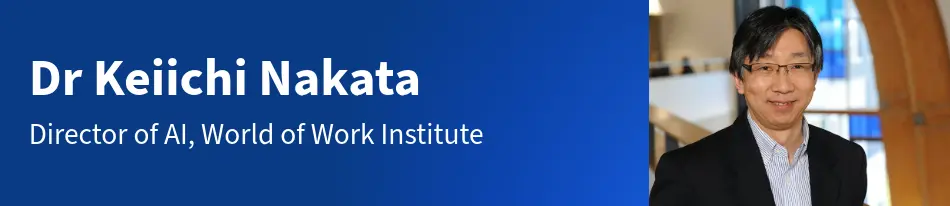
Human values will become more important as AI takes hold
“AI has now passed the ‘peak of inflated expectations’, as characterised by Gartner’s Hype Cycle. What comes next is important for its continued success and movement through disillusionment and enlightenment, towards the ‘plateau of productivity’..."
Dr Keiichi Nakata explains that AI has moved beyond the hype phase and is entering a more challenging but important stage where its real value must be proven. As businesses navigate environmental concerns, regulatory uncertainty and ongoing debates around innovation versus control, leaders face complex decisions about how AI should be used. He emphasises that successful adoption will depend on aligning AI with organisational values, strengthening ethical leadership and psychological safety, and engaging with the technology critically rather than being driven by it.

AI and marketing will become intrinsically linked
“2026 will also see huge opportunities for AI in the world of marketing. Smart companies are already on track to incorporate AI in their processes. Much of this will be focused on behind the scenes processes, such as supply chain efficiencies and speeding up new product development..."
Professor Adrian Palmer highlights that AI will create major opportunities in marketing, particularly by improving behind-the-scenes activities such as supply chains and product development. While consumer-facing uses of AI may receive mixed reactions, he suggests this shift will prompt deeper questions about human agency and authenticity. The most forward-thinking organisations will anticipate these challenges, using AI thoughtfully while developing products and services that offer personal connection, choice and genuine human value.

DEI will not die but undergo a rebrand
“Following the events of 2025, moving forward, DEI is less likely to appear as a separate initiative and more as something built into everyday business, even if the specific term is used less openly..."
Dr Melissa Carr explains that DEI is evolving from a standalone initiative into something embedded within everyday business practice, often under labels such as culture, belonging or responsible business. As political and regulatory pressures diverge globally, organisations are likely to maintain shared values around equity and dignity while adapting their approaches regionally. Ultimately, she argues that the true test will be whether employees continue to see meaningful action on inequality, with the strongest organisations treating DEI as a core part of their long-term values and credibility, not a passing trend.

Political risk will become a permanent problem for international trade
“In 2025, President Trump positioned tariffs as a way to trigger reshoring and attract foreign direct investment. Yet despite a number of investment pledges, few large-scale projects actually materialised..."
Professor Davide Castellani argues that while tariffs have been promoted as a way to encourage reshoring and attract investment, in practice they often have the opposite effect. Because modern supply chains rely on globally sourced components and equipment, tariffs raise production costs and increase uncertainty, discouraging real investment. He suggests that as political risk becomes a lasting feature of international trade, the most resilient businesses will be those that plan for ongoing volatility by diversifying suppliers, improving supply-chain visibility and treating political risk as a permanent strategic concern.
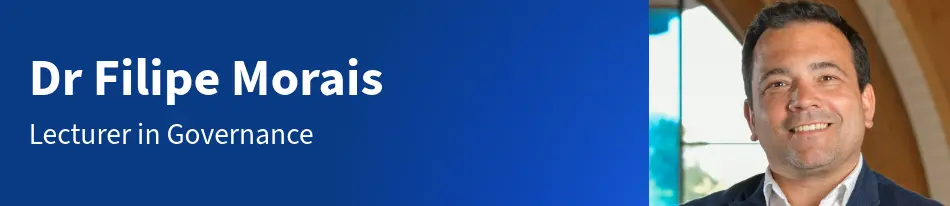
Boards could hold more power under new proposals
“On 11 December 2025, the US government issued an executive order signed by Donald Trump directing the Securities and Exchange Commission to clamp down on existing provisions regarding proxy advisors, including a revision of Rule 14a-8 governing shareholder proxy proposals..."
Dr Filipe Morais warns that recent US moves to restrict shareholder proxy rights risk weakening corporate governance. He argues that curbing the role of proxy advisors and shareholder proposals shifts power away from checks and balances and towards management, undermining long-term, stakeholder-focused governance. While the influence of large investors like BlackRock, Vanguard and State Street deserves scrutiny, Morais cautions that politically driven reforms could politicise boardrooms and erode accountability, with uncertain consequences for how boards and management operate going forward.
Learn more about the Henley academics featured in this article:
Professor Keiichi Nakata, Director of AI, World of Work Institute
Professor Adrian Palmer, Professor of Marketing
Dr Melissa Carr, Director of EDI, World of Work Institute
Professor Davide Castellani, Professor of International Business
Dr Filipe Morais, Lecturer in Governance
Read the original article here.